Past Works
Organic Molecules in Star Formation Regions
Previously I worked with Professor Rachel Friesen and Dr. Duo Xu looking at long carbon chains in star forming regions. I used a machine learning package to identify clusters of different organic molecules as seen below
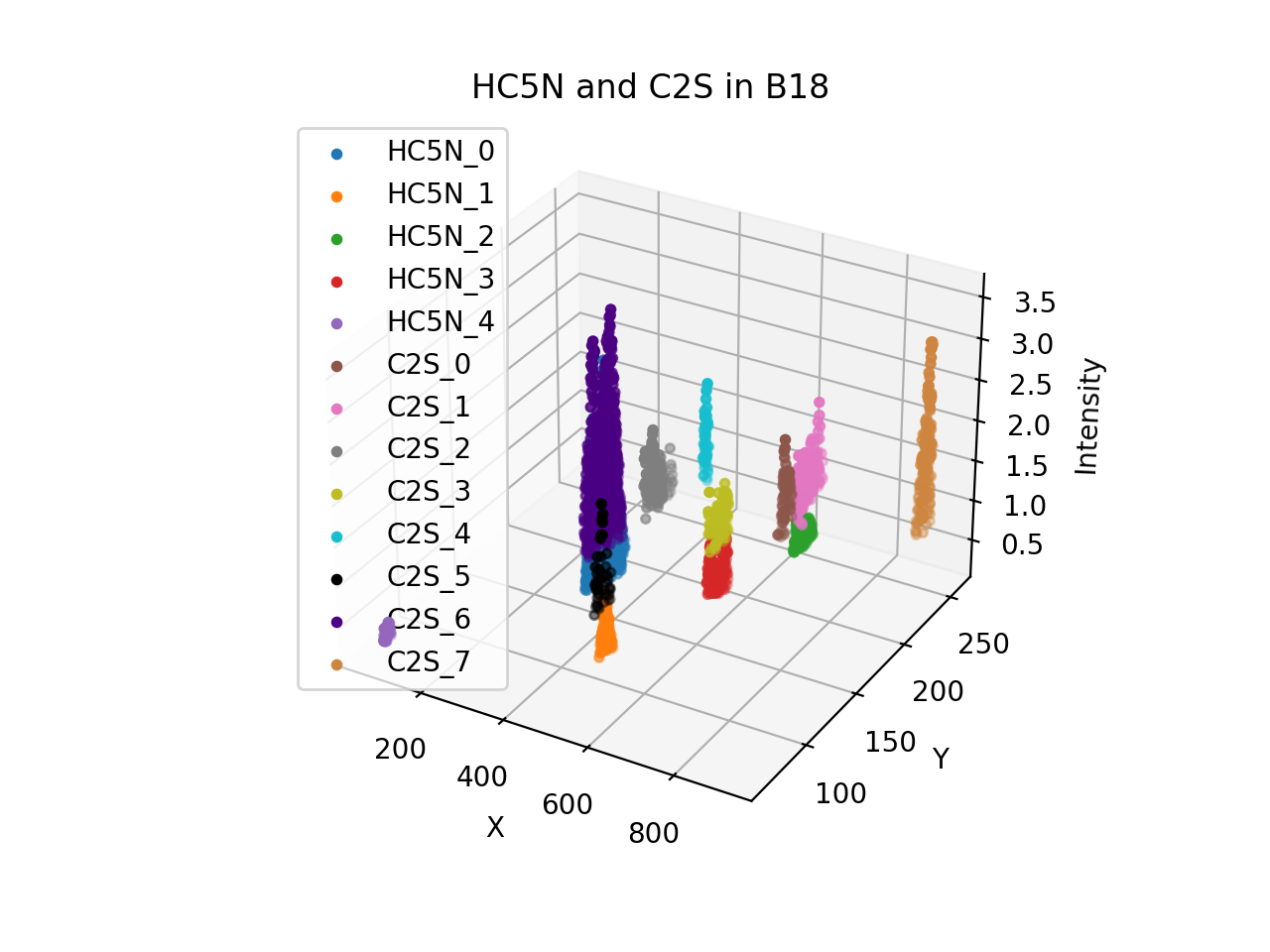
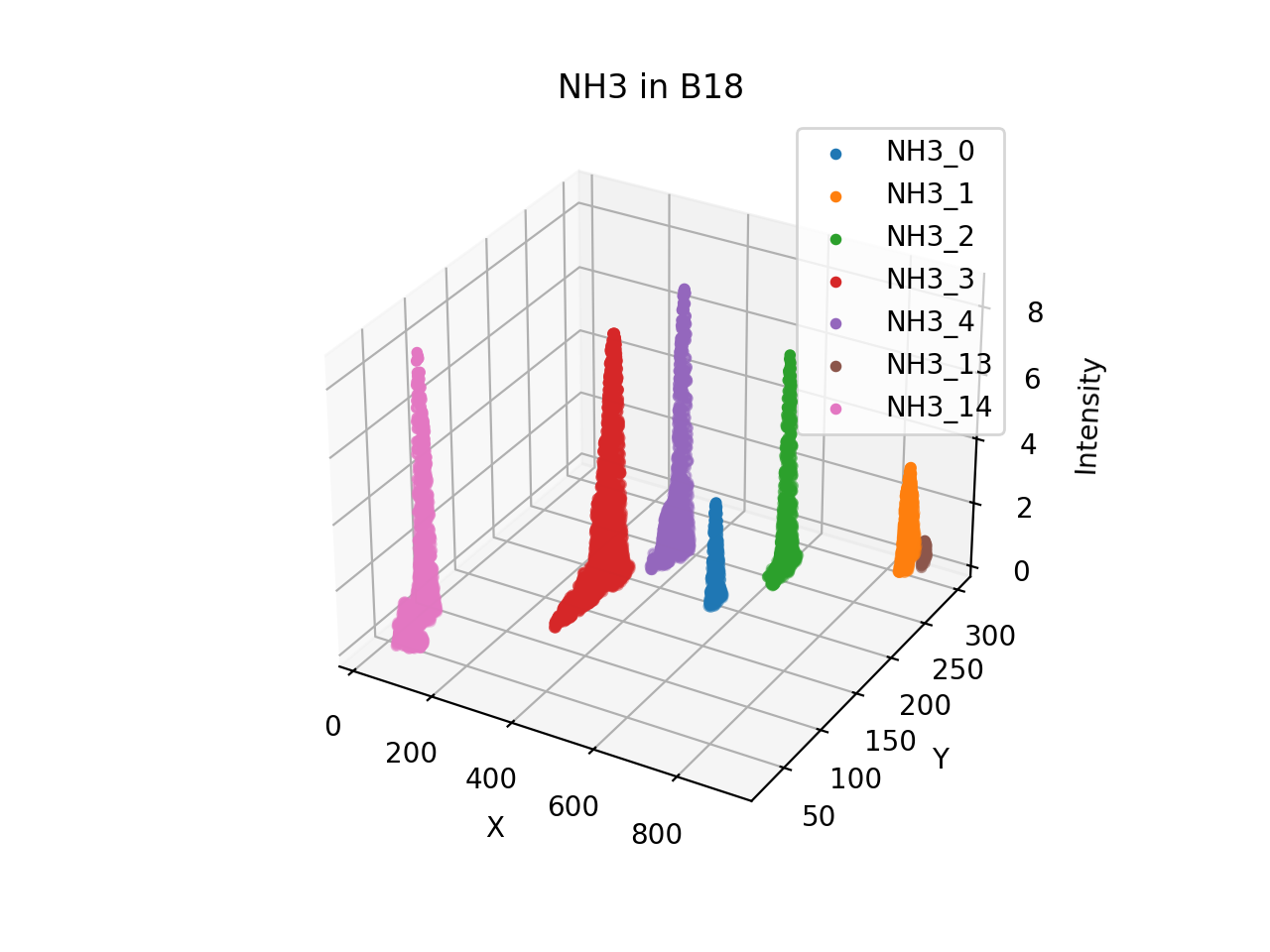
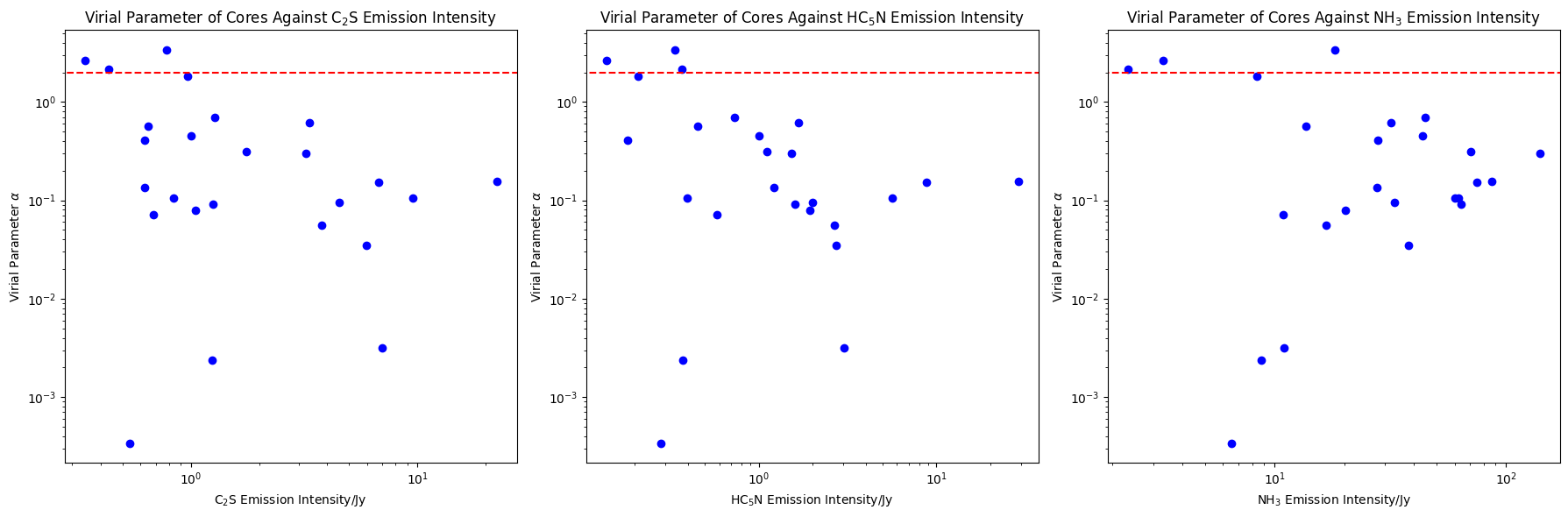
Using these results together with Dust maps from the James Clark Maxwell Telescope and Carbon Monoxide maps from the Five College Radio Astronomical Observatory. We set out boundries of each cores using dust and then compute the virial parameters of each of these molecules and compare them to the abundance of the complex molecules. Initial analysis shows us that there are some positive relations between the stability of such cores and the abundance of complex molecules.
I presented my results at the 2025 Rubin Community Workshop and gave a poster presentation. My Final report can be found here
Project Stars
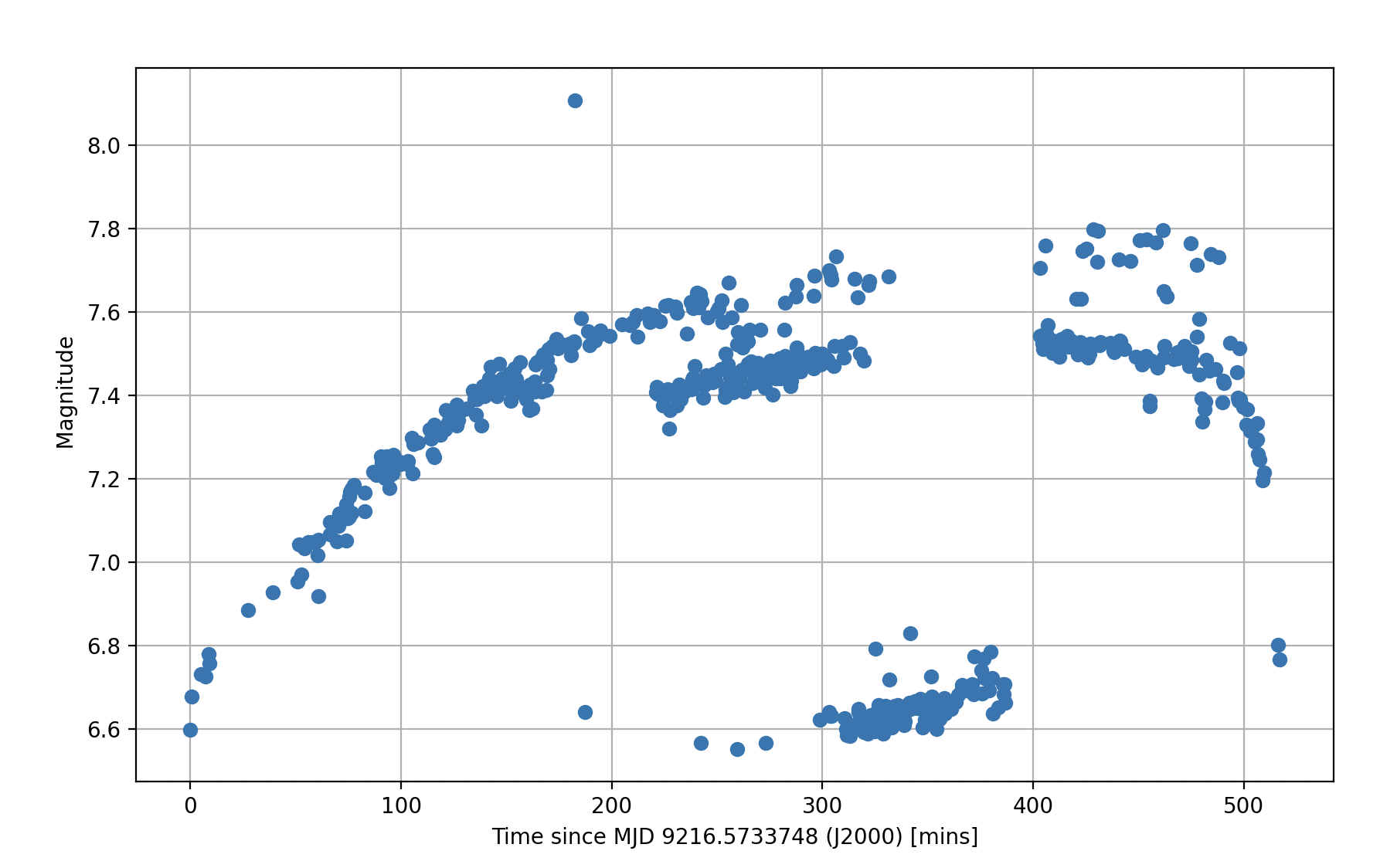
Project Stars is a Research Course Project done in collaboration with Aditya Khandewal under the supervision of Prof. Roberto Abraham. The project utilises 3-5 ZWO Seestar S50 controlled by a SEESTAR_ALP API. My work in this project mainly revolves around data collection, such as wrting Server Messaging Block (SMB) scripts for the transfer of data from the SEESTAR to a cloud location and debugging issues with the SEESTAR. Currently we are resolving some issues with calibration but otherwise have a well developed pipeline to acquire, store, analyse and visualise observable scientific interests like variable stars such as the one below
Exposure Time Calculator for UofT E.C Carr observatory
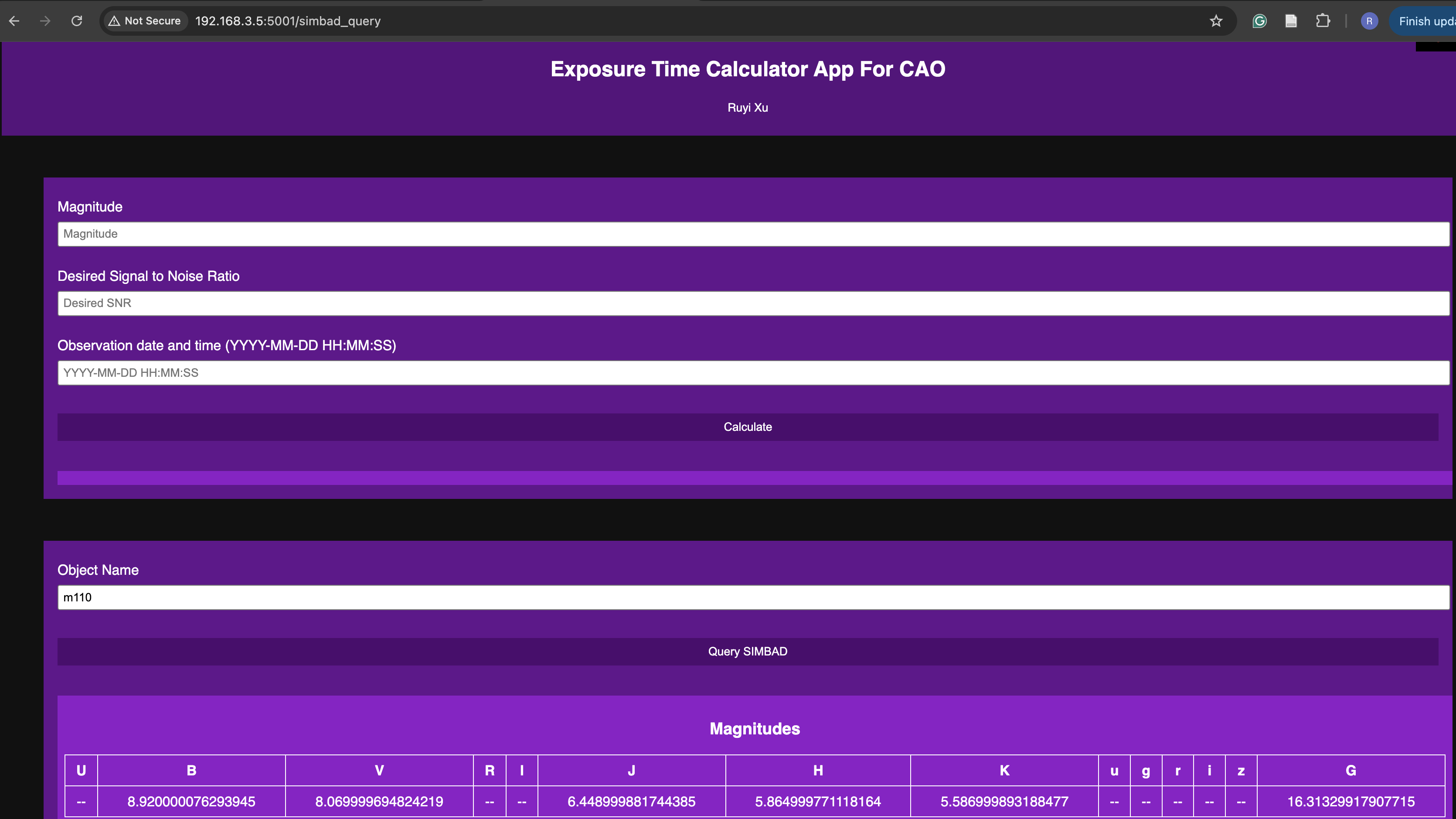
This is a Work Study Project involving developing a exposure time calculator for non-science students to use the Half-Meter telescope at the E.C Carr Astronomical Observatory for their coursework. Currently the exposure calculator assumes all object are point source targets and takes into account the sky brightness of the location, twilight brightness and moon brightness. The current version of the calulator can be found here.
Undergraduate Astronomy Lab Projects
The following 2 projects are completed as part of AST399Y5 under the supervision of Professor Lea Hirsch
Satellite Dynamics
This Lab Manual is written in 2023 intended for introductory undergraduate astronomy courses with the use of Unistellar’s Evscope2. Students will be expected to plan observation nights based on weather and availability of targets and be expected to learn how to process .fits files and apply geometry to determine the dynamics of satellites of their choice.
Solar Rotations
This Lab Manual is written in 2023 intended for introductory undergraduate astronomy courses with the use of Unistellar’s Evscope2. A more accessible lab that can be performed during daytime. Students will be expected to apply fitting functions and come-up with their own solar differential rotation equations. This Longitude-Latitude tool was developed to identify the positions of sunspots.
Bloop
This Project is a “coin drop in pond” simulation made for UTM WiSC’s PYJAC competition which won us first place in the beginner’s category.
Modified Dispersion Relations in Neutrino Oscillations
This thesis is written in 2015 as a Science Research Programme at National University of Singapore while I was a student at Catholic Junior College as a Higher-3 coursework (equivalent to highschool honors). This Project is Supervised by Professor Ching Chee Leong.