Current Work(s)
Organic Molecules in Star Formation Regions
Currently, I am working with Professor Rachel Friesen and Dr. Duo Xu looking at long carbon chains in star forming regions. I am using a machine learning package to identify clusters of different organic molecules as seen below
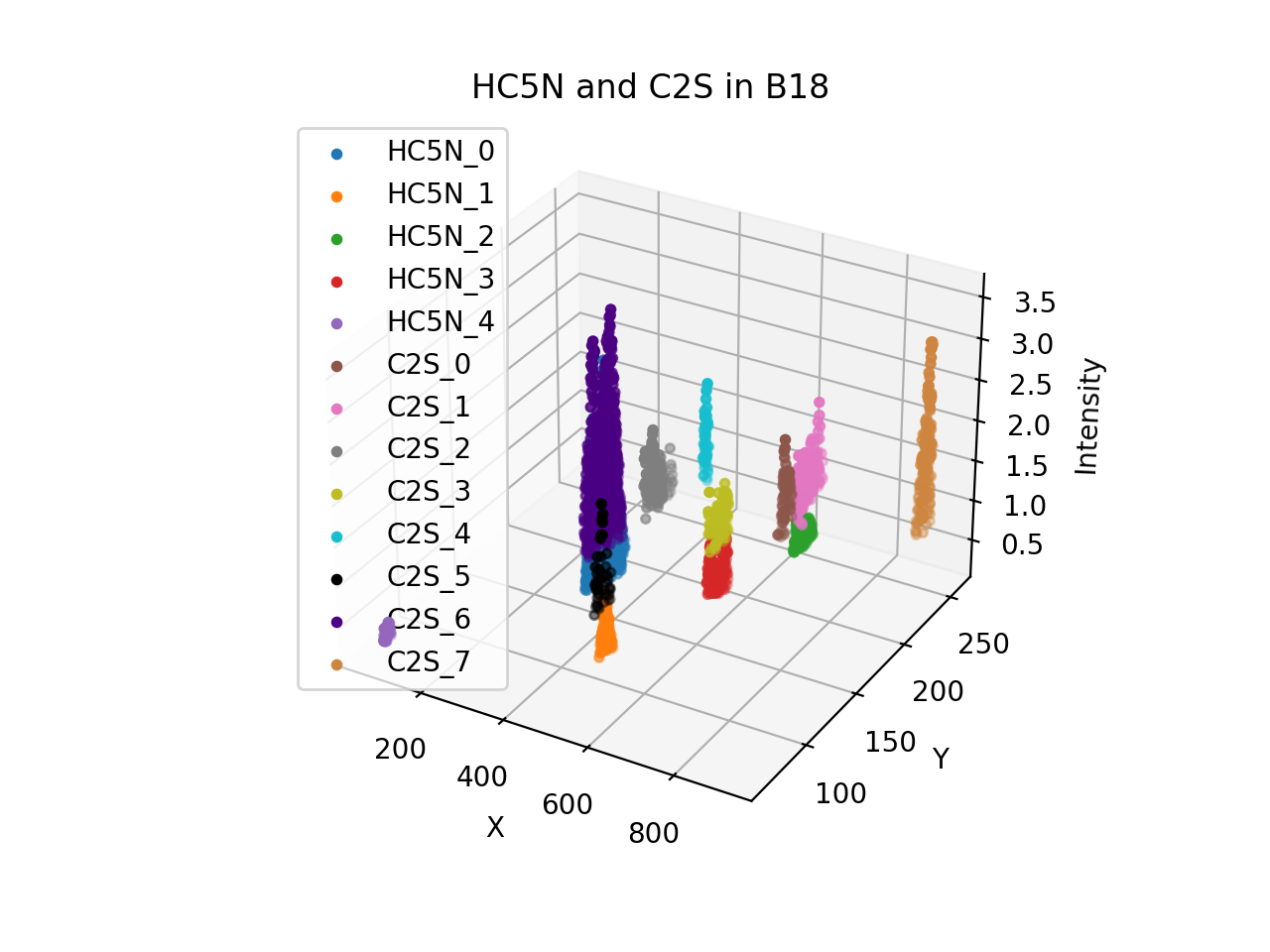
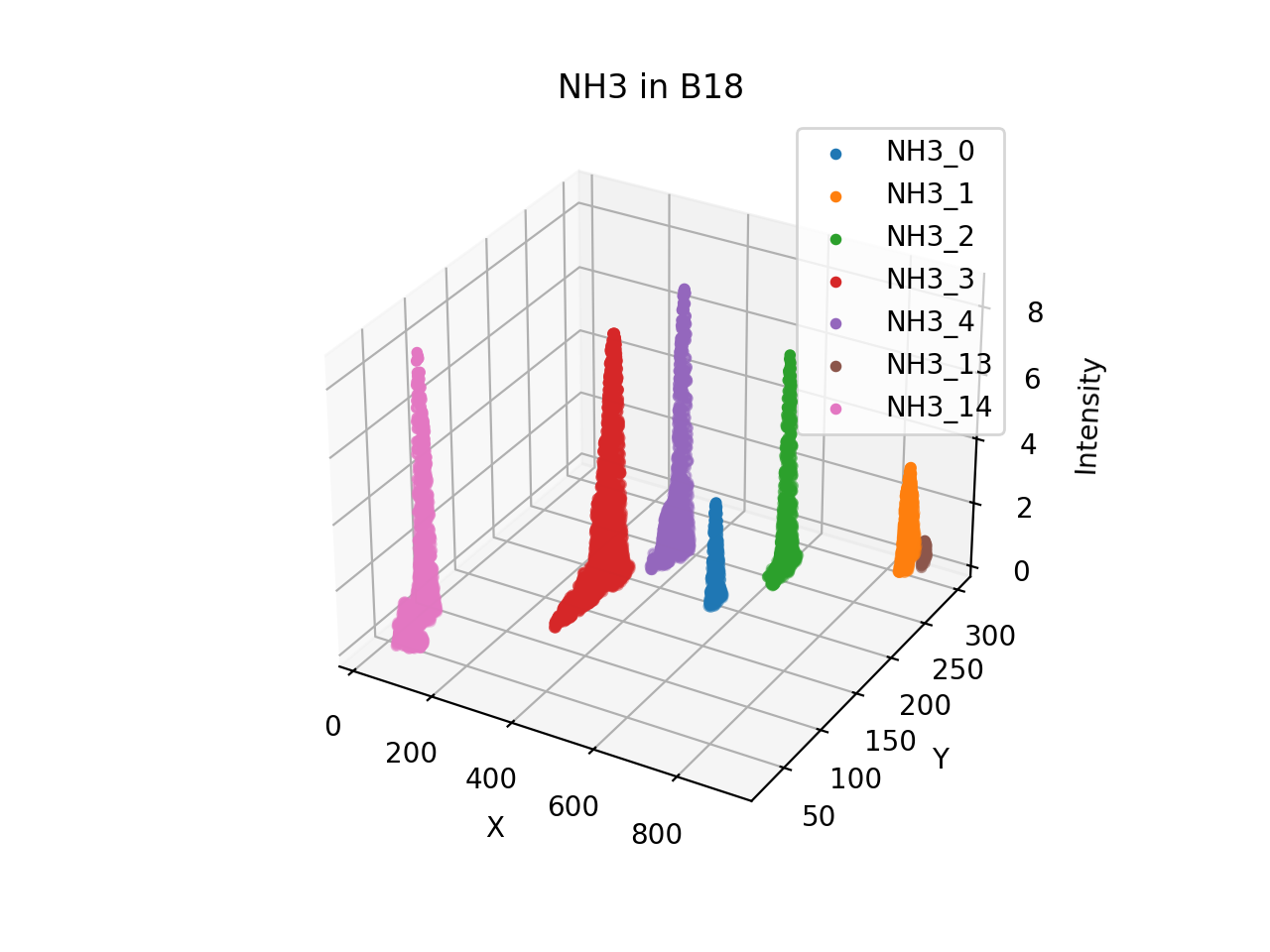
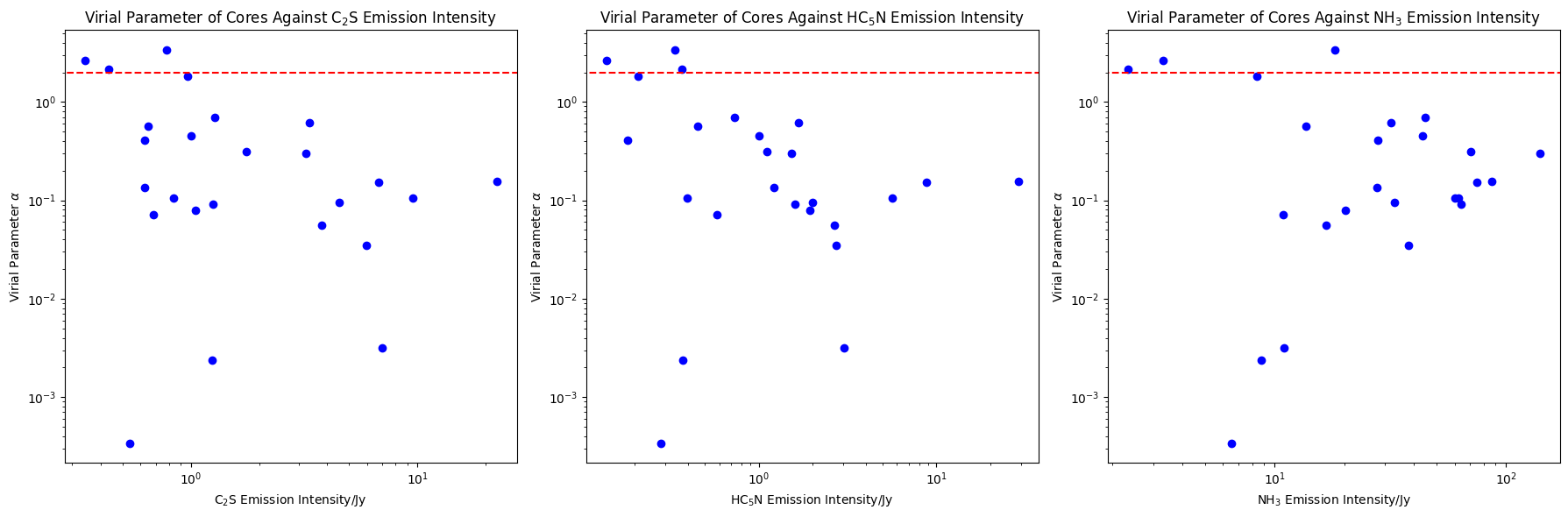
Using these results together with Dust maps from the James Clark Maxwell Telescope and Carbon Monoxide maps from the Five College Radio Astronomical Observatory. We set out boundries of each cores using dust and then compute the virial parameters of each of these molecules and compare them to the abundance of the complex molecules. Initial analysis shows us that there are some positive relations between the stability of such cores and the abundance of complex molecules.
Future Plans Future work currently I am working on include adding in pressure parameters to the model and publishing my results as a paper. Other possible work that can be explored with the project include increasing the complexity of our modules by considering factors such as magnetic fields, rotational kinematics and probing into the chemistry of such regions.
Project Stars
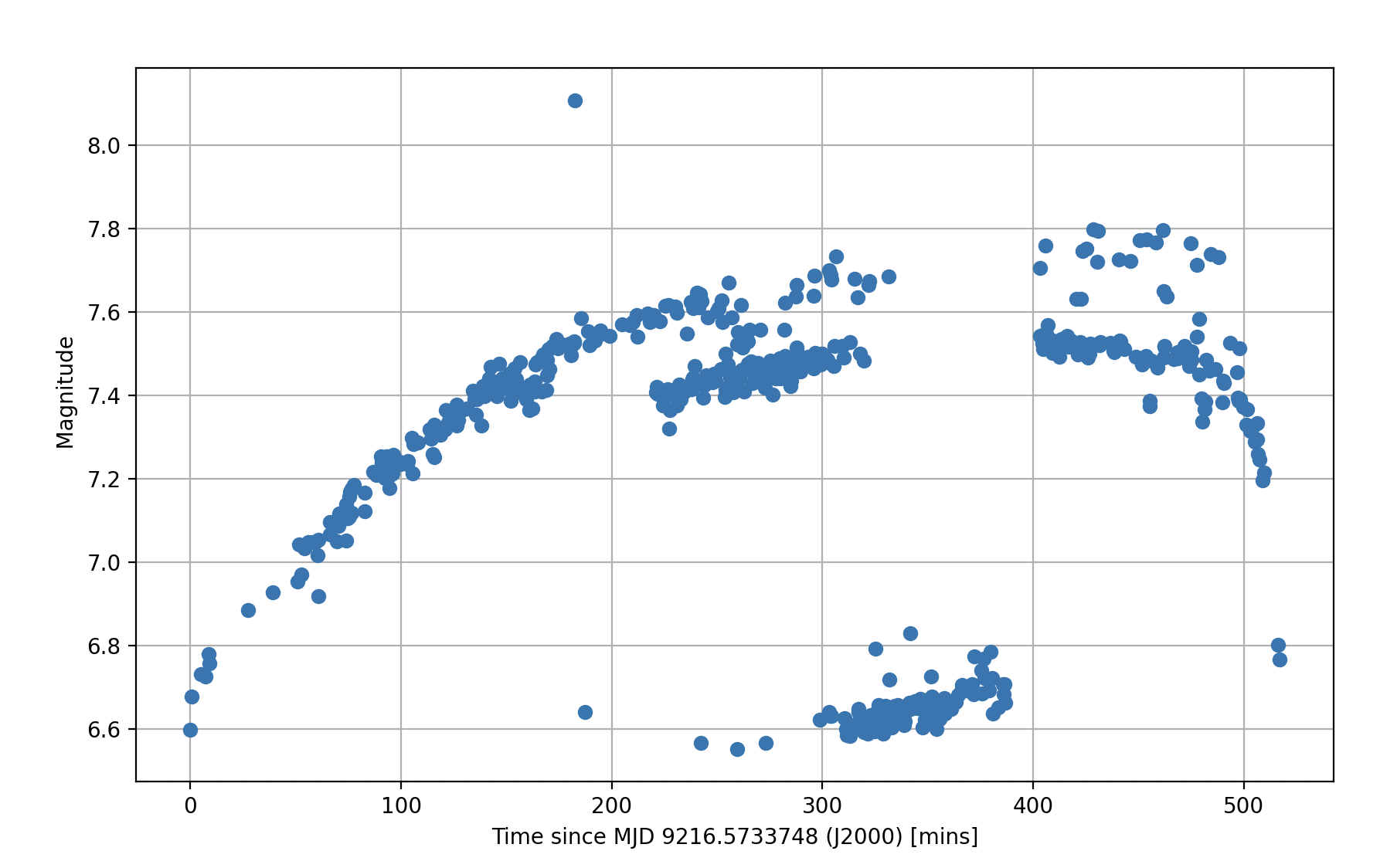
Project Stars is a Research Course Project done in collaboration with Aditya Khandewal under the supervision of Prof. Roberto Abraham. The project utilises 3-5 ZWO Seestar S50 controlled by a SEESTAR_ALP API. My work in this project mainly revolves around data collection, such as wrting Server Messaging Block (SMB) scripts for the transfer of data from the SEESTAR to a cloud location and debugging issues with the SEESTAR. Currently we are resolving some issues with calibration but otherwise have a well developed pipeline to acquire, store, analyse and visualise observable scientific interests like variable stars such as the one below
Future Plans Future work involve resolving our current calibration issues and then developing a manual for the usage of our pipeline. Once this is done we aim to make comparisons with ore expensive telescopes to see the cost to snr ratio of using such methoods, we aim to publish a paper on this topic as well.
Exposure Time Calculator for UofT E.C Carr observatory
This is a Work Study Project involving developing a exposure time calculator for non-science students to use the Half-Meter telescope at the E.C Carr Astronomical Observatory for their coursework. Currently the exposure calculator assumes all object are point source targets and takes into account the sky brightness of the location, twilight brightness and moon brightness. The current version of the calulator can be found here.
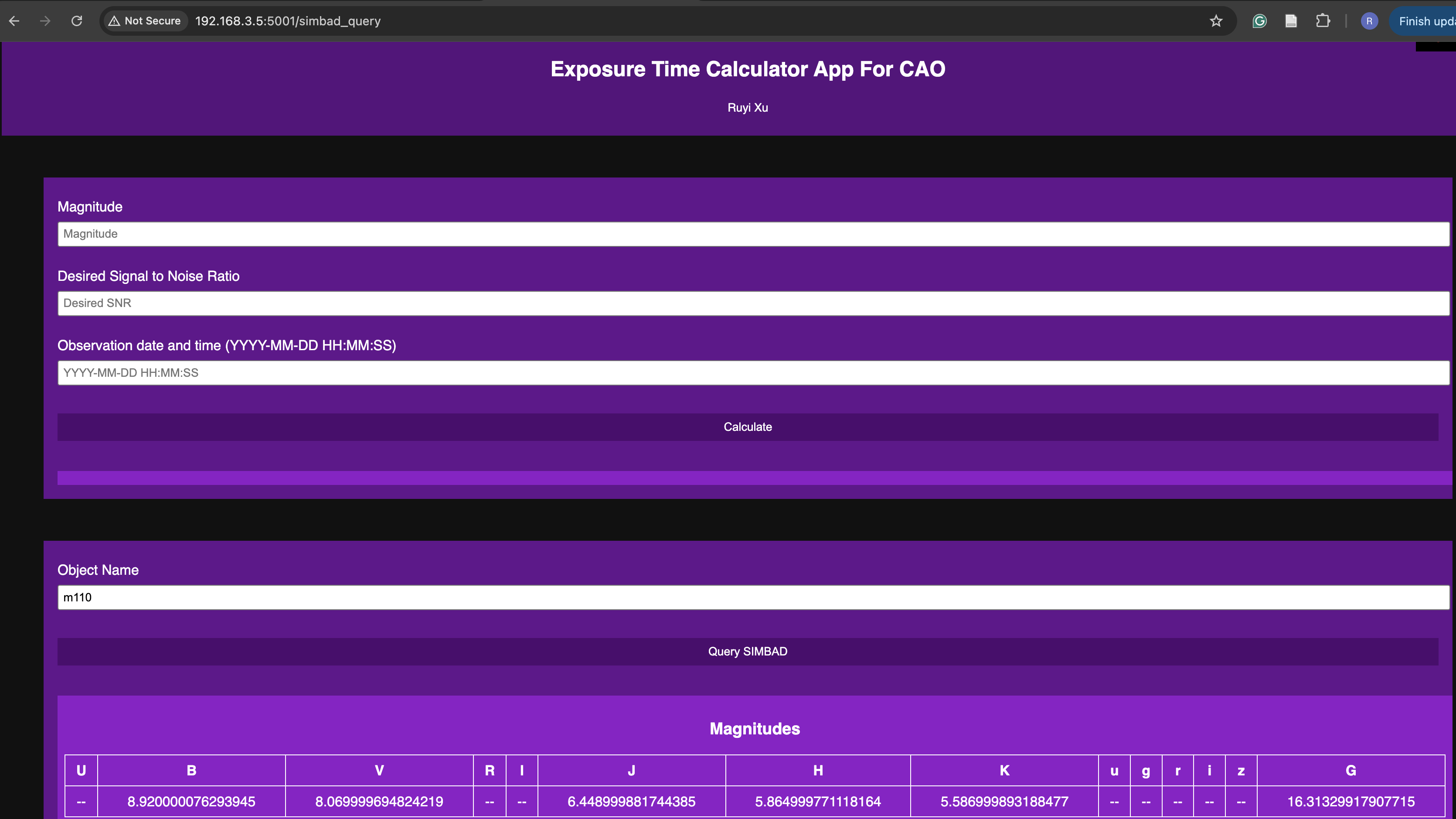
Future Work Currently there are plans to add in more weather factors into the calculator such as atmospheric extinction, humidity, pressure and etc. Aside from this there are plans to develop an extended object version of this calculator and add a search catalogue to atoumatically find the magnitude of the object observed.